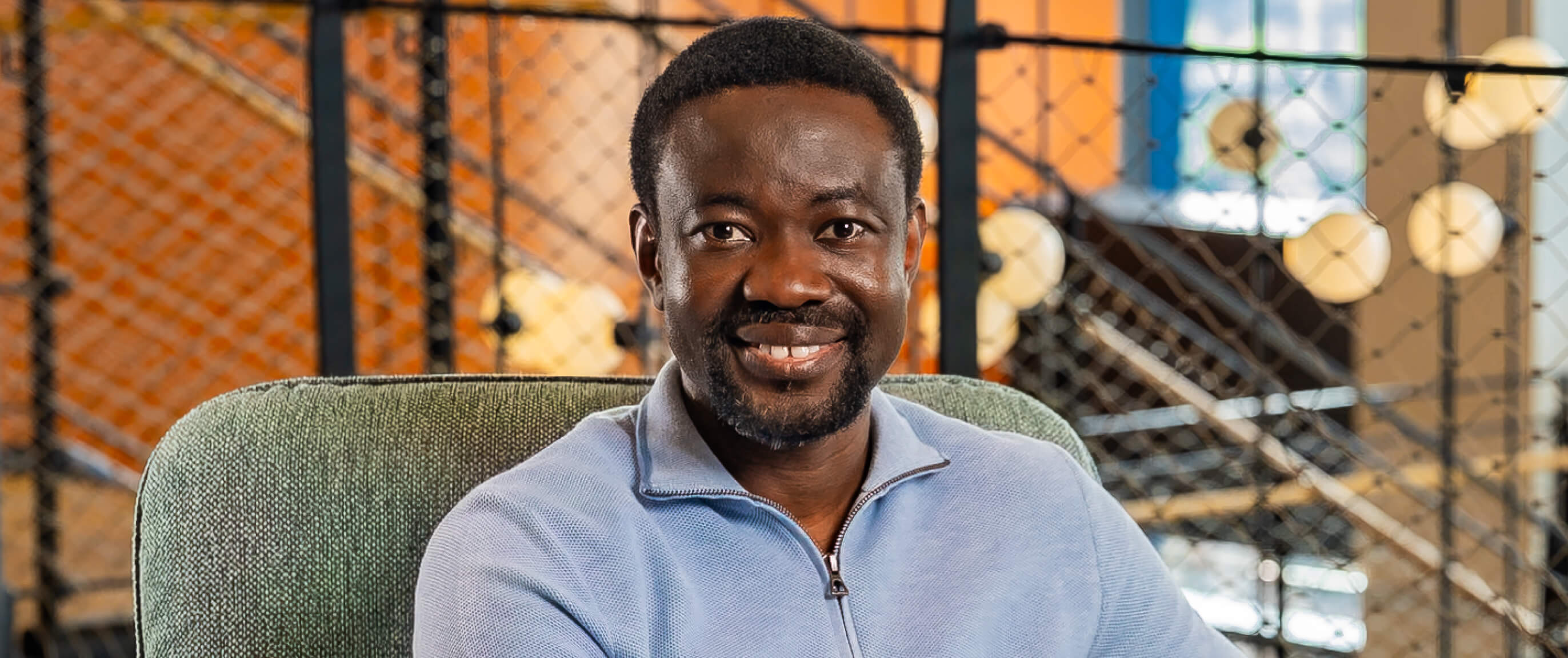
How our scientists build AI that can see without compromising trust
Principal Applied Scientist Seyi F. makes visual intelligence work within the hardest constraint there is: earning and keeping customer trust.
Committed to responsible applied science and AI
Seyi F. was living and working in London when a LinkedIn message showed up asking if he wanted to come work at Amazon. He gave it a shot anyway. The interviews went well.
He’s been here a little over seven years now, including a stint away that only confirmed what he’d been missing.
“On a given day I can be working with our AWS folks or our Stores folks or our Alexa folks,” says Seyi. “That breadth of impact was what really drew me back to Amazon.”
Today, Seyi works as a Principal Applied Scientist on privacy and trust for Alexa and other devices. His current focus: visual intelligence. Specifically, giving AI the ability to understand the world around it.
Giving AI eyes
“What if you show [AI] a plant and want to know how to care for it?” Seyi asks.“ You show it a painting and want to know who made it? Those questions go beyond just asking. You’re showing it something and having it answer based on that.”
The engineering is harder than it sounds. It must be fast, accurate, work in every lighting condition, and scale to millions of customers, all without compromising privacy.
“We have devices that now see and hear in people’s homes,” notes Seyi. “Trust, privacy, and responsible AI is critical to getting these devices to work in a way that helps people hold their trust in Amazon.”
Why constraints sharpen the science
Amazon’s customer promises go beyond what regulators require. We don’t sell your data. Alexa isn’t always listening. We don’t advertise to children. These aren’t legal minimums. They’re choices.
Most companies treat privacy as a compliance checkbox. Seyi treats it as the constraint that makes the problem worth solving.
“Customer trust is very easily lost,” says Seyi. “It takes a long time to earn it, but it takes a very simple slip to lose it.
“Once you know we have made these commitments to our customers, now we need to make visual intelligence work. We need to make machine learning models work. But we have these constraints that really force you to think. It sets up the dynamics for solving really hard science problems.”
The people it helps
For people who are blind or have low vision, a device that can see changes daily life in ways sighted people overlook.
“I got to view dozens of videos of people trying to navigate basic things,” says Seyi. “What are the buttons on my washer and dryer? I’m holding two cans which feel the same, and which one is salt and which one is pepper? Having Alexa give them a sense of independence was really inspiring.”
What keeps him
His mentor, a distinguished scientist, opened doors to projects he wouldn’t have found on his own. Amazon’s scale means working across departments that are each bigger than most companies.
And the curiosity and opportunity is real.
“Amazon is a place that really fosters your curiosity,” says Seyi. “That’s why it’s much easier to switch teams here than almost any other company. Scientists value that. And Amazon has really helped me explore it.”
The question on his mind: whether AI can produce a step-function change across broader life, beyond just writing code faster.
“I don’t have the answers yet. But I think Amazon is one place where you can get the answer.”